weblog peanut research resources inspiration the book
Showing posts with label Global input. Show all posts

Saturday, October 31, 2015

Food is Life

There has been a few articles this week about the dramatic effects and impacts about processed meat on our body and health. Plants in full swing and a rather serious advice to stay away from the processed counter. The processed meat seems definitely related to an excessive amount of salt and antibiotics.  Several varieties of meat are according these reports as bad as smoking. The WHO is publishing research and warning the consumer.
Dear Michael Pollen you seem right after all!

When I read about Pollen I automatically think about by mother. I mentioned her often in my writings on this blog. I love her and was absolutely at the frontline of a new wave of food knowledge and -education in the seventies. And nothing changed, she stayed loyal and the transmitted her knowledge to me. She might not be my role model for cooking; I mean recipes wise, she's absolutely my role model for nutrition. Her chemistry-medical background and her work in cancer clinics have changed the way she observed the world. When she got married and became a full time mother she never stopped using her scientific knowledge in her challenging role as family 'cook' for my dad and her five children. She's my personal nutrition coach.

Common sense. There isn't really a new thing under the sun. Fruit and vegetables are the two most important groups of nutrition during my childhood. Cycling home from the field-hockey training we stopped at the apple orchard and got an apple for free...   My mother got piles of apples in wooden fruit crates in the small outhouse in the back of the garden. We only ate the fruits from the season. And those apples were so large, so fresh, so unbelievable juicy and I see why my girls get upset with the taste of apples in London when I think back.

Eat and enjoy the richnesses of each season at least if you don't have to deal with any food intolerances or  food allergies. I admit we make exceptions because of my deadly allergic daughter.
I do buy grapes, strawberries and raspberries all year round, simply because of her. Berries and grapes are for her easily to digest. Never had she experienced a reaction while consuming these fruits. And that is a happy feeling!   

I follow the footsteps of my mother and reduce our intake of meat. The girls love a good piece of meat and that's perfect. We really moderate. My allergy girl instead always had a more intense need for meat, not easy to compensate all the limitations she's dealing with since she was a baby. So common sense it is again. Every meal I try to find, since we deal with a life organised around allergies,  a recipe that is a fair mix of myself, allergy prescriptions and nutritional facts. Everyday I cook with intuition. Food is Life! 

Lunch today: plants, fibres , protein, phosphorus, iodine...
It's Halloween, and about my allergy girl.  She's home at home from Imperial College.
And I make: shrimps with garlic in olive oil. Mushrooms, garlic, coriander, lime, white cabbage sautéed olive oil. I boil her rice noodles and serve with soya sauce.

My eclectic kitchen table. The blue bowl is from Japan, which my husband brought me last year. from a business trip. The tiny little bowl has been with me since I left in Beijing (spring 1998). I took it with me in my suitcase, as a last souvenir from my 2,5 years in China. It comes in a set of three. The rectangular plates are French porcelain these I bought in Rabat. They come in a set of four. 

Wednesday, January 16, 2013

Fast food and common sense


Fast food and takeaways linked to surge in child asthma and allergies

Teenagers more likely to have severe asthma and eczema if they eat fast food more than three times a week, study shows
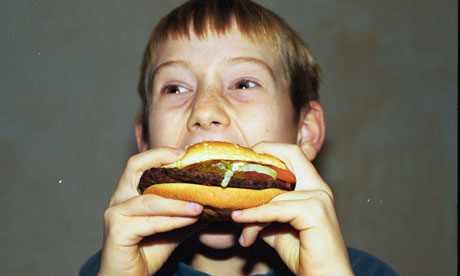
A child eating junk food
Fast food was the only type of food associated with asthma and allergies across all ranges and countries, the study shows. Photograph: Martin Godwin for the Guardian
A diet of fast food and takeaways may be behind the steady surge in children's asthma and allergies affecting the UK and other developed countries, according to a study.
An international collaboration of scientists has found that young teenagers in particular are nearly 40% more likely to have severe asthma if they eat burgers and other types of fast food more than three times a week. Children aged six to seven had an increased risk of 27%. Children eating fast food were also more likely to get severe eczemaand rhinitis – a condition where the nose blocks or runs and the eyes are itchy and water.
The scientists, from New Zealand, Spain, Australia and Germany as well as Nottingham in the UK, say their study could have "major public health significance owing to the rising consumption of fast foods globally" if the link they have found turns out not to be coincidence but causal.
The good news was that eating fruit appeared to protect young peoplefrom asthma and allergies. Eating three or more portions a week reduced the severity of the symptoms by 11% among teenagers and 14% among younger children.
The research, published in the journal Thorax, part of the BMJ group, came out of a large collaborative project called the International Study of Asthma and Allergies in Childhood (ISAAC), which involves nearly 2 million children in more than 100 countries, making it the biggest of its kind.
The fast food study involved a relatively small proportion of the children taking part in ISAAC, from two age groups: 319,000 13- to 14-year-olds from 51 countries and 181,000 six- to seven-year-olds from 31 countries.
The children and their parents were sent questionnaires about their eating habits over the previous 12 months. They were asked how often they had eaten specific foods, including meat, fish, fruit and vegetables, pulses, cereals, bread and pasta, rice, butter, margarine, nuts, potatoes, milk, eggs, and fast food/burgers. They were also asked whether and how often they suffered from specific asthma and allergy symptoms – and if so, how severe they were and whether they stopped them sleeping or interfered with daily life.
Fast food – the authors specifically mentioned burgers only because it was the reference to fast food that most people would understand – was the only food type associated with asthma and allergies across all age ranges and countries. The authors said that "such consistency adds some weight to the possible causality of the relationship". But they said more research would be needed to discover whether fast food is definitely a problem.
The fast food link was stronger among teenagers than among the young children, which the authors suggest may be because adolescents have more independence, money and control over what they eat.
The paper says a link between fast food and asthma and allergies is biologically plausible. It could be "related to higher saturated fatty acids, trans fatty acids, sodium, carbohydrates and sugar levels of fast food and possibly preservatives". Fast foods have high levels of industrially hydrogenated vegetable fats such as margarine, which can be a source of trans fatty acids – "and there is some evidence that dietary intake of trans fatty acids is associated with asthma and allergy", say the authors. In the teenagers, eating butter, margarine and pasta was also associated with asthma symptoms.
Studies which involve asking people about their diet can be problematic, because people either forget or tailor the truth. Professor Hywel Williams, from the centre of evidence-based dermatology at Nottingham University, said recall over the 12 months of the study was more likely to be inaccurate than biased and this would tend to dilute any association between fast food and asthma, rather than the reverse.
"Now if there was a widespread belief already out there that fast foods are 'bad' for allergies, then you could say the data was simply reflecting such prior prejudices/beliefs. But we are not aware of any such widespread prior belief. People often believe fast foods are associated with things like acne, obesity and hyperactivity, but not allergies, and severe allergies at that. And even if one country had such a belief, how could you explain such consistency across so many countries and cultures and socio-economic groups?"
The study did not differentiate between types of fast food. "Our question simply asked, 'In the past 12 months, how often, on average, did you (did your child) eat or drink the following: meat; seafood; fruit; vegetables (green and root); pulses (peas, beans, lentils); cereal; pasta (including bread); rice; butter; margarine; nuts; potatoes; milk; eggs and fast food/burgers?'," he said. "So we could analyse each of these categories, but not split them down any further.
"And before we put the boot into burgers specifically, it does not mean they are always "fast" as some of us (including me) make very nutritious "slow" burgers at home – but it seemed like a well understood anchor for fast foods since burgers are one of the commonest types of fast food sold around the world."
Malayka Rahman, from Asthma UK, said: "This research adds to previous studies that suggest a person's diet can contribute to their risk of developing asthma, and indicates the benefit of further research to determine the effects that particular food groups can have on the chances of developing asthma or the impact it may have on severity. Evidence suggests that the vitamins and antioxidants found in fresh fruit and vegetables have a beneficial effect on asthma, therefore Asthma UK advises people with asthma to eat a healthy, balanced diet including five portions of fruit or vegetables every day, fish more than twice a week, and pulses more than once a week."

Previous research

Cornish pastiesCornish pasties hot from the oven. Photograph: foodfolio/Alamy
Many parents of children with asthma and allergies will already be watching carefully their child's diet since certain foods – notoriously nuts – are known to trigger allergic reactions.
With news that studies show apparently bland burgers, nuggets, pasties and similar fast foods could contribute to the risk, they will be keen to know what research suggests are the safer options for family dinners.
One better bet appears to be a Mediterranean diet. Asthma UK cites research into diet and asthma arried out in Athens in 2011 by Grigoropoulou and colleagues, which compared school children in the city with those in a rural part of Greece. They found that the urban children were more likely to get asthma, but eating a Mediterranean diet, rich in vegetables, fish and oils, appeared to protect them.
Fish oils on their own, however, did not do so well in a study from Edinburgh University published in 2009. This was a review of a number of studies where children had been given omega 3 and omega 6 supplements in the hope of preventing allergies, while other comparable children had been given placebos – dummy pills. The researchers found no clear evidence that the supplements had any protective effect.
"Contrary to the evidence from basic science and epidemiological studies, our systematic review and meta-analysis suggests that supplementation with omega 3 and omega 6 oils is probably unlikely to play an important role as a strategy for the primary prevention of sensitization or allergic disease," they concluded.
Trans fatty acids have been linked to asthma and allergies before, in addition to raising cholesterol levels and the NHS advises people to reduce their intake. The fast food study suggests that the best advice for parents wanting to protect their children from asthma and allergies is to try to ensure they have a generally healthy diet, with plenty of fruit and hopefully some vegetables, and to steer clear of fast food restaurants.
• This article was amended on 15 January 2013 to clarify that the study found that children aged six to seven had an increased risk of 27% of having severe asthma, if they eat burgers and other types of fast food more than three times a week.
  • Tim Radford
    In this digestible online video, former Guardian Science Editor Tim Radford reveals his approach to science writing. Find out more and watch now

Today's best video

  • Young man wearing headphones
    Angelique Chrisafis writes on France's intervention in Mali; Dave Simpson talks to Johnny Marr about going solo. With audiobook reviews of Christopher Priest and Daniel Defoe.
Guardian Professional
eatright
Look and feel great with our online healthy eating and dieting service.
eatright
  • 13 personalised diet plans
  • Tasty recipes
  • Support from qualified nutrionists
  • Personalised fitness programme

Guardian Bookshop

This week's bestsellers

  1. 1. Examined Life
    by Stephen Grosz£11.99
  2. 2. Play it Again
    by Alan Rusbridger £15.19
  3. 3. English Affair
    by Richard Davenport-Hines £16.00
  4. 4. Jerusalem
    by Yotam Ottolenghi £16.00
  5. 5. I am the Secret Footballer
    £7.99
  • Guardian local shopping map

Sponsored feature

Mini beef roasting joints with walnut and pesto
Simple, delicious recipes
Find some tasty inspiration for midweek meals